Mostrar mensagens com a etiqueta Goethe. Mostrar todas as mensagens

quarta-feira, 9 de outubro de 2019

Acção

Angelica Kauffman, Johann Wolfgang von Goethe (1775)
-
«Pensar é fácil; agir, difícil; transformar os pensamentos em actos é o mais difícil».
-
Johann W. Goethe.
-
Citação retirada do livro Dicionário de Citações e Provérbios, de Luis Señor González, publicado pelo Correio da Manhã, em 2004, p. 20.

quarta-feira, 6 de setembro de 2017

Árvore da vida

Janey Morris, Tree of Life (Tapeçaria do quarto de William Morris, em Kelmscott Manor)
-
«All theory, dear friend, is gray, but the golden tree of life springs ever green.»
-

sábado, 12 de março de 2016

A Cor segundo Goethe XIX - O Verde

Agnolo Bronzino, Portrait of a lady in green (Royal Collection, Windsor Castle, Londres)
-
«The eye experiences a distinctly grateful impression from this color.»
-

Citado por Maria Popova, «Goethe on the Psychology of Color and Emotion - “Color itself is a degree of darkness.”»
in https://www.brainpickings.org/2012/08/17/goethe-theory-of-colours/

sexta-feira, 11 de março de 2016

A Cor segundo Goethe VIII - O Vermelho

Berthe Morisot, The red blouse (1885)
-
«The effect of this color is as peculiar as its nature. It conveys an impression of gravity and dignity, and at the same time of grace and attractiveness. The first in its dark deep state, the latter in its light attenuated tint; and thus the dignity of age and the amiableness of youth may adorn itself with degrees of the same hue.»
-
Citado por Maria Popova, «Goethe on the Psychology of Color and Emotion - “Color itself is a degree of darkness.”»

quinta-feira, 10 de março de 2016

A Cor segundo Goethe VII - Entre o Azul e o Vermelho

Paul Gauguin, Vahine no te vi (Woman with a Mango) (1892, The Baltimore Museum of Art, Baltimore)
-
«This unquiet feeling increases as the hue progresses (...). On this account, when it is used for dress, ribbons, or other ornaments, it is employed in a very attenuated and light state, and thus displays its character as above defined, in a peculiarly attractive manner.»
-
Citado por Maria Popova, «Goethe on the Psychology of Color and Emotion - “Color itself is a degree of darkness.”»

quarta-feira, 9 de março de 2016

A Cor segundo Goethe VI - Entre o Vermelho e o Azul

Sousa Lopes, Estudo de mar - Caparica (1928, Museu de José Malhoa)
-
«Blue deepens very mildly into red, and thus acquires a somewhat active character, although it is on the passive side.»
-
Johann Wolfgang von Goethe, Theory of Colors (1810),
Citado por Maria Popova, «Goethe on the Psychology of Color and Emotion - “Color itself is a degree of darkness.”»
in https://www.brainpickings.org/2012/08/17/goethe-theory-of-colours/

terça-feira, 8 de março de 2016

A Cor segundo Goethe V - O Azul

Georgia O'Keeffe, Blue Morning Glories (1935)
-
«(..) Its appearance, then, is a kind of contradiction between excitement and repose.
As the upper sky and distant mountains appear blue, so a blue surface seems to retire from us.
But as we readily follow an agreeable object that flies from us, so we love to contemplate blue — not because it advances to us, but because it draws us after it.»
-
Citado por Maria Popova, «Goethe on the Psychology of Color and Emotion - “Color itself is a degree of darkness.”»

segunda-feira, 7 de março de 2016

A Cor segundo Goethe IV - Entre o Amarelo e o Vermelho

Julius Sergius von Klever, Walking on the Water 
-
«The active side is here in its highest energy (...).
It produces an extreme excitement, and still acts thus when somewhat darkened.»
-
Johann Wolfgang von Goethe, Theory of Colors (1810),
Citado por Maria Popova, «Goethe on the Psychology of Color and Emotion - “Color itself is a degree of darkness.”»
in https://www.brainpickings.org/2012/08/17/goethe-theory-of-colours/

sexta-feira, 4 de março de 2016

A Cor segundo Goethe III - Entre o Vermelho e o Amarelo

Robert Mangold, + Within + (Red, Yellow, Orange) (1981, Kunstmuseum Winterthur, Winterthur)
-
«The color increases in energy, and appears in red-yellow more powerful and splendid.
All that we have said of yellow is applicable here, in a higher degree. The red-yellow gives an impression of warmth and gladness, since it represents the hue of the intenser glow of fire.»
-
Citado por Maria Popova, «Goethe on the Psychology of Color and Emotion - “Color itself is a degree of darkness.”»
in https://www.brainpickings.org/2012/08/17/goethe-theory-of-colours/

quinta-feira, 3 de março de 2016

A Cor segundo Goethe II - O Amarelo

Laszlo Moholy-Nagy, Yellow Circle
-
«This is the color nearest the light. (...)
In its highest purity it always carries with it the nature of brightness, and has a serene, gay, softly exciting character.»
-
Citado por Maria Popova, «Goethe on the Psychology of Color and Emotion - “Color itself is a degree of darkness.”»
in https://www.brainpickings.org/2012/08/17/goethe-theory-of-colours/

quarta-feira, 2 de março de 2016

A Cor segundo Goethe I - Luz e Escuridão

Nicholas Roerich, Light Conquers Darkness (1933)
-
«Light and darkness, brightness and obscurity, or if a more general expression is preferred, light and its absence, are necessary to the production of color… Color itself is a degree of darkness.»
-

in Maria Popova, «Goethe on the Psychology of Color and Emotion - “Color itself is a degree of darkness.”» in https://www.brainpickings.org/2012/08/17/goethe-theory-of-colours/

sexta-feira, 23 de outubro de 2015

Demada(s) II - Ou do destino e da liberdade

Viktor M. Vasnetsov, The Flying Carpet, a depiction of the hero of Russian folklore, Ivan Tsarevich (1880, Nizhny Novgorod State Art Museum)
-
Goethe terá afirmado:

«Magic is believing in yourself, if you can do that, you can make anything happen.»
-
Eu, sinceramente, acredito mais que:
«Life is a compromise between fate and free will.»
-
Mas, há sempre a possibilidade de ter outros pontos de vista

sábado, 26 de abril de 2014

Da beleza das coisas simples

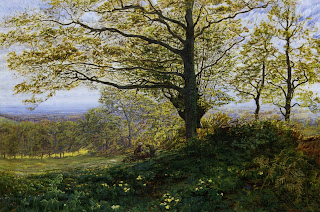
Theodore Robinson, Tree Blossoms
-
«A beleza ideal está na simplicidade calma e serena.»
-

sábado, 24 de novembro de 2012

Natureza e Arte

Vincent Van Gogh, Girl in the woods (1882, in The Athaneum).
---
«Aquele a quem a Natureza começa a revelar a evidência do seu segredo a ser irresistivelmente atraído para a Arte, que da Natureza é a sua melhor expositora». 
---
Goethe, Fausto (1808).

Citado por Maria do Carmo Sousa Lino, As Artes Decorativas na Obra de Raul Lino, Lisboa, Universidade Lusíada, 1999 (Tese de Mestrado)

sábado, 17 de novembro de 2012

«One ought, every day at least ...»

Jean-Baptiste-Camille Corot, Marissal, Path to the Front of the Church (1866, in The Athaneum).
---
«One ought, every day at least, to hear a little song, read a good poem, see a fine picture, and, if it were possible, to speak a few reasonable words».
---
Goethe (in Wikiquote).

quinta-feira, 15 de novembro de 2012

«Which is the best government?»

Goethe, Historic view of Heidelberger Schloss (1815, in Wikimedia Commons).
---
«Which is the best government? That which teaches us to govern ourselves» 
---
Goethe (in Wikiquote).

terça-feira, 16 de outubro de 2012

Sobre a escola

---
«Instruction does much, but encouragement everything». 
---
Goethe, carta para A. F. Oeser (1768).

terça-feira, 7 de agosto de 2012

Arquitectura

Ferdinand Georg Waldmüller, Hof der alten Heumüller in Wien (1859).
---
« L'architecture, c'est de la musique figée. »

domingo, 27 de maio de 2012

Dia de Pentecostes

Giotto, Pentecost (1320-25, National Gallery, Londres).
---
De acordo com o site Web Gallery of Art, este painel é o sétimo de uma série sobre a vida de Cristo. Julga-se que este painel terá sido realizado com a colaboração de outros pintores da oficina do artista, mas as duas figuras da frente, em posição simétrica, serão obra de Giotto, pelo facto de serem mais soldiamente pintadas e as suas expressões demonstrarem uma atitude mais expressivamente natural.
O Pentecostes festeja-se, na Igreja Católica, cinquenta dias após a Ressurreição, mas também é festejado entre os Judeus (comemorando a dádiva de Deus dos Dez Mandamentos no Monte Sinai). Pelo que li, há vários costumes ligados ao Pentecostes, mesmo entre os cristãos. Em inglês é chamado de «Whitsunday», devido às vestes brancas usadas por aqueles que eram baptizados durante a vigília. Na Itália era costume atirar folhas de rosas do tecto das igrejas para recordar o milagre das línguas de fogo. Na França tocavam-se trombetas durante o serviço Divino, para lembrar o som do vento que acompanhou a descida do Espírito Santo. Na Rússia levam-se flores e ramos verdes nas mãos. Por outro lado, é de notar a ligação desta festividade à Primavera, o que é notório num poema de Goethe:

Pfingsten, das liebliche Fest, war gekommen;
es grünten und blühten
Feld und Wald; auf Hügeln und Höhn,
in Büschen und Hecken
Übten ein fröhliches Lied die neuermunterten Vögel;
Jede Wiese sprosste von Blumen in duftenden Gründen,
Festlich heiter glänzte der Himmel und farbig die Erde.
---

sábado, 17 de março de 2012

Música e pintura

Joseph Rodefer DeCamp, The Violinist (uploaded by Art Inconnu).
---
«A cor é a música dos olhos».
---
Goethe,
(frase retirada da exposição «A Geometria das Cores» do Museu de Sacavém).