Este blogue é pessoal e sem fins lucrativos. Se sentir que eu estou a infringir os seus direitos de autor(a) agradeço que me contacte de imediato para eu remover o referido conteúdo: elias.margarida@gmail.com / This blogue is a non-profit and personal website. If you feel that your copyright has been infringed, please contact me immediately: elias.margarida@gmail.com
sexta-feira, 29 de agosto de 2014
quinta-feira, 28 de agosto de 2014
Evasões: Óbidos
Los viajes me devuelven, transeúnte,
al lugar preferido de la casa,
para soñar y meditar poemas,
llegar a otras vidas con la mía.
-
Etiquetas:
Alfonso López Gradoli,
Fotografia,
Margarida Elias (imagens),
Óbidos
quarta-feira, 27 de agosto de 2014
Outra realidade
Anne-François-Louis Janmot, Le Poème de l'âme (séc. XIX, Musée des Beaux-Arts, Lyon)
-
«(…) Music,
like reading (another private pleasure which can be done in public, on trains
or buses), has often offered a sort of inner landscape of feelings, emotions and
associations to which we can retreat from the bustle and hassle of the “real
world”, a sort of “second world”, adjacent to but separate from the everyday
one. We can tune in, through music, to the imagination, or escape into
ourselves (…).»
-
du Gay, P., Hall, S., James, L., Mackay, H. and Negus, K. (1997) Doing Cultural Studies: The Story of the Sony Walkman. Sage Publications (in association with the OpenUniversity), p. 20.
Espelhos Mágicos II
-
Which Has to Do with a Mirror and its Fragments
Now then! We will begin. When the story is done you shall know a great deal more than you do know.
He was a terribly bad hobgoblin, a goblin of the very wickedest sort and, in fact, he was the devil himself. One day the devil was in a very good humor because he had just finished a mirror which had this peculiar power: everything good and beautiful that was reflected in it seemed to dwindle to almost nothing at all, while everything that was worthless and ugly became most conspicuous and even uglier than ever. In this mirror the loveliest landscapes looked like boiled spinach, and the very best people became hideous, or stood on their heads and had no stomachs. Their faces were distorted beyond any recognition, and if a person had a freckle it was sure to spread until it covered both nose and mouth.
"That's very funny!" said the devil. If a good, pious thought passed through anyone's mind, it showed in the mirror as a carnal grin, and the devil laughed aloud at his ingenious invention.
All those who went to the hobgoblin's school - for he had a school of his own - told everyone that a miracle had come to pass. Now, they asserted, for the very first time you could see how the world and its people really looked. They scurried about with the mirror until there was not a person alive nor a land on earth that had not been distorted.
Then they wanted to fly up to heaven itself, to scoff at the angels, and our Lord. The higher they flew with the mirror, the wider it grinned. They could hardly manage to hold it. Higher they flew, and higher still, nearer to heaven and the angels. Then the grinning mirror trembled with such violence that it slipped from their hands and fell to the earth, where it shattered into hundreds of millions of billions of bits, or perhaps even more. And now it caused more trouble than it did before it was broken, because some of the fragments were smaller than a grain of sand and these went flying throughout the wide world. Once they got in people's eyes they would stay there. These bits of glass distorted everything the people saw, and made them see only the bad side of things, for every little bit of glass kept the same power that the whole mirror had possessed.
A few people even got a glass splinter in their hearts, and that was a terrible thing, for it turned their hearts into lumps of ice. Some of the fragments were so large that they were used as window panes-but not the kind of window through which you should look at your friends. Other pieces were made into spectacles, and evil things came to pass when people put them on to see clearly and to see justice done. The fiend was so tickled by it all that he laughed till his sides were sore. But fine bits of the glass are still flying through the air, and now you shall hear what happened.
-
Hans Christian Andersen, The Snow Queen
Etiquetas:
Hans Christian Andersen,
Histórias infantis,
Ilustração,
Vilhelm Pedersen
segunda-feira, 25 de agosto de 2014
Virgem / Virgo
Codex Schürstab, Virgo (séc. XV)
-
Giovanni Maria Falconetto, Signo de Virgem (1515-1520, Palazzo d'Arco, Mantua)
-
Jacob Jordaens, Virgo (séc. XVII)
-
Mikalojus Ciurlionis, Virgo (1907)
quinta-feira, 21 de agosto de 2014
Noites de verão
Etiquetas:
Árvores,
Ilustração,
Marcela Calderón,
Neil deGrasse Tyson
quarta-feira, 20 de agosto de 2014
Gaivotas
Ohara Koson, Seagulls over the Waves (c.1915)
-
«The castle of Cair Paravel on its little hill towered up above them; before them were the sands, with rocks and little pools of salt water, and seaweed, and the smell of the sea and long miles of bluish-green waves breaking for ever and ever on the beach. And oh, the cry of the sea-gulls! Have you heard it? Can you remember?»
-
C. S. Lewis, Chronicles of Narnia, The Lion, the Witch and the Wardrobe (1950)
quarta-feira, 6 de agosto de 2014
Viagens
Paul Gabriël, Il vient de loin (Kröller-Müller Museum)
-
«To move, to breathe, to fly, to float,
To gain all while you give,
To roam the roads of lands remote,
To travel is to live.»
-
Etiquetas:
Hans Andersen Brendekilde,
Paisagem,
Paul Gabriël
sexta-feira, 1 de agosto de 2014
Agosto
Irmãos Limbourg, Les très riches heures du Duc de Berry: Aout (1412-1416, Musée Condé, Chantilly)
-
Oficina de Simon Bening, Livro de Horas: Calendário (mês de Agosto) (1530, 1534, Museu Nacional de Arte Antiga)
-
Jacob van Huysum, Twelve months of flowers: August (The Fitzwilliam Museum, Cambridge)
-
Alfred Sisley, Poplars a Moret sur Loing, an August Afternoon (1888)
Edward Hopper, August in the City (1945, Norton Museum of Art)
Etiquetas:
Alfred Sisley,
Animais,
Edward Hopper,
Flores,
Iluminura,
Irmãos Limbourg,
Jacob van Huysum,
Paisagem,
Simon Bening
terça-feira, 29 de julho de 2014
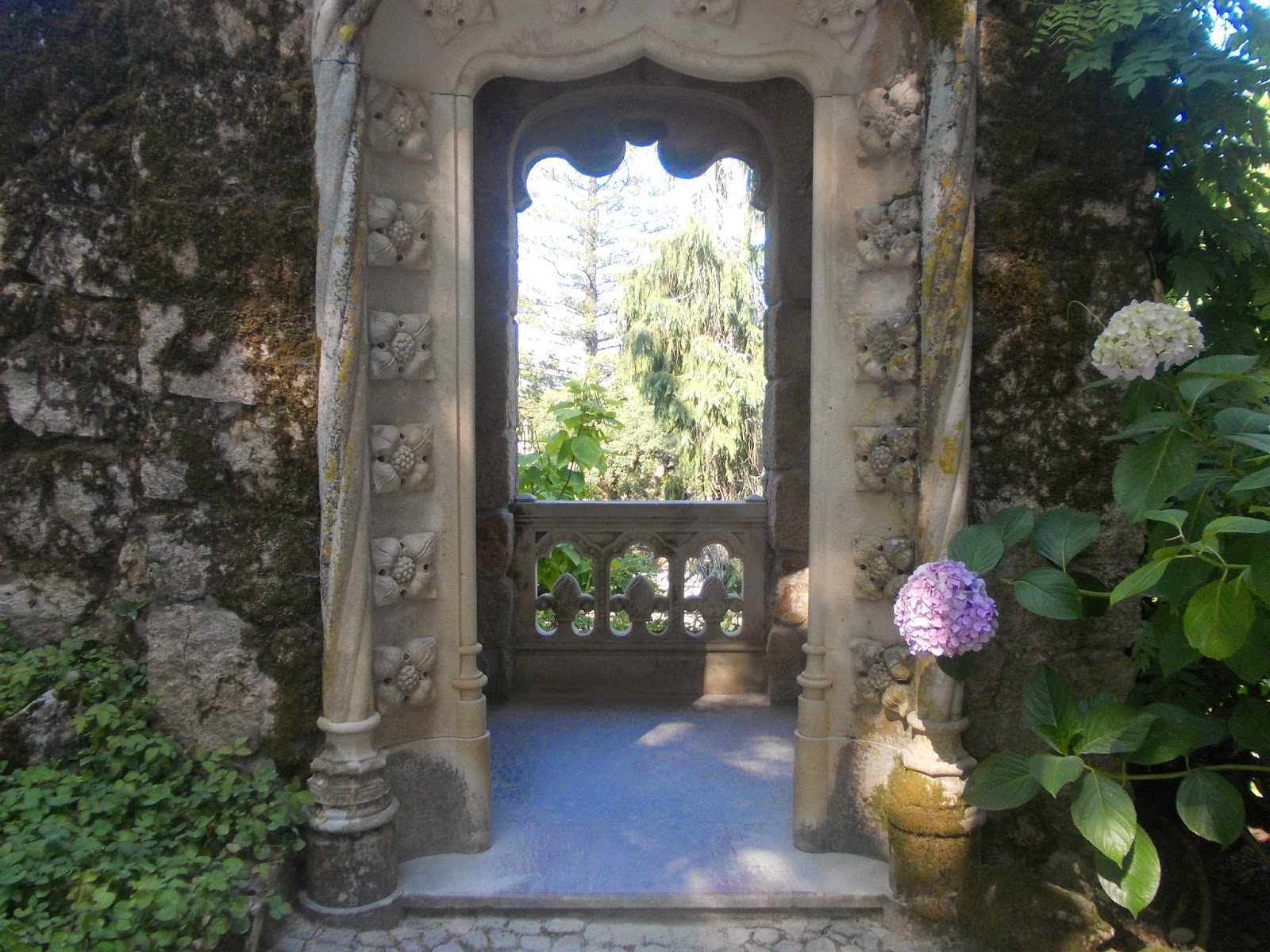
Vida, Sintra, Regaleira, flores e etc.
-
«Life, with its rules, its obligations, and its freedoms, is like a sonnet: You’re given the form, but you have to write the sonnet yourself.»
-
Madeleine L’Engle, A Wrinkle in Time (via Yay Kid Lit)
-
Etiquetas:
Escultura,
Flores,
Fotografia,
Madeleine L’Engle,
Margarida Elias (imagens),
Sintra
segunda-feira, 28 de julho de 2014
(re)ler
-
«We do not enjoy a story fully at the first reading. Not till the curiosity, the sheer narrative lust, has been given its sop and laid asleep, are we are leisure to savour the real beauties. Till then, it is like wasting great wine on a ravenous natural thirst which merely wants cold wetness. The children understand this well when they ask for the same story over and over again, and in the same words.»
-
Etiquetas:
C.S. Lewis,
Lana Del Rey,
Rachelle Levingston
sexta-feira, 25 de julho de 2014
Cadeiras Thonet
Michael Thonet (1796-1871) foi um construtor de mobiliário alemão, que desenvolveu o processo de fabricar móveis de madeira curvada. A sua cadeira n.º 14, criada em 1859, tornou-se numa das cadeiras mais comercializadas de sempre e ainda hoje se vende (link, link e link)
-
(link)
-
-
Nikolay Bogdanov-Belsky, School Friends
-
-
-
Sándor Galimberti, Interior with Thonet-chair (c. 1908)
-
-
Cadeira de baloiço (móvel de criança) (séc. XIX, Palácio Nacional da Ajuda)
-
Arnold Newman, Pablo Picasso no atelier em Cannes (1956, Getty Images)
-
Mário Novais, Sala de Estar da Pousada de São Pedro (Castelo de Bode) (1965-1975, Biblioteca de Arte da Fundação Calouste Gulbenkian)
-
Outro dia, a rever o filme da Sininho e o Tesouro Perdido (2009), notei que na casa dela existe também uma cadeira Thonet n.º 14:
quinta-feira, 24 de julho de 2014
Coisas: móveis
Michele Maule, Two Chairs (link)
-
«(…) Goods
assembled together in ownership make physical, visible statements about the
hierarchy of values to which their chooser subscribes. Goods can be cherished
or judged inappropriate, discarded, and replaced. (…)»
-
Mary Douglas, Baron Isherwood, The World of Goods, Towards an Anthropology of Consumption, London, New York, Routledge, 1996 (1.ª ed. 1979), p. IX.
Etiquetas:
Baron Isherwood,
Mary Douglas,
Michele Maule,
Mobiliário
quarta-feira, 23 de julho de 2014
Da (in)visibilidade das coisas
Nate Fakes (link)
-
«(…) things do not call attention to themselves – they are so integrated in our lives, being at the same time the "most obvious and the best hidden".»
-
Bjornar Olsen (citando Lefevbre, 1987), «Material Culture after Text: Re-Remembering Things», Norwegian Archeological Review, vol 36, n 2, 2003, p. 94.
Etiquetas:
Banda Desenhada,
Bjornar Olsen,
Lefevbre,
Mobiliário,
Nate Fakes
sábado, 19 de julho de 2014
Lá vem a Nau Catrineta...
Almada Negreiros, Lá vem a Nau Catrineta que traz muito que contar (1946-1948, Gare Marítima de Alcânara, Lisboa - in Restos de Colecção)
-
Lá vem a nau Catrineta
Que tem muito que contar!
Ouvide, agora, senhores,
Uma história de pasmar.
Passava mais de ano e dia
Que iam na volta do mar
Já não tinham que comer,
Já não tinham que manjar.
Deitaram sola de molho
Para o outro dia jantar;
Mas a sola era tão rija
Que a não puderam tragar.
Deitaram sorte à ventura
Qual se havia de matar;
Logo foi cair a sorte
No capitão general.
Sobe, sobe, marujinho,
Àquele mastro real,
Vê se vês terras de Espanha,
As praias de Portugal.
"Não vejo terras de Espanha,
Nem praias de Portugal;
Vejo sete espadas nuas
Que estão para te matar".
Acima, acima gajeiro,
Acima ao tope real!
Olha se enxergas Espanha,
Areias de Portugal
"Alvíssaras, capitão,
Meu capitão general!
Já vejo terra de Espanha,
Areias de Portugal.
Mais enxergo três meninas
Debaixo de um laranjal:
Uma sentada a coser,
Outra na roca a fiar,
A mais formosa de todas
Está no meio a chorar".
-Todas três são minhas filhas,
Oh! quem mas dera abraçar!
A mais formosa de todas
Contigo a hei-de casar.
"A vossa filha não quero,
Que vos custou a criar".
- Dar-te-ei tanto dinheiro,
Que o não possas contar.
"Não quero o vosso dinheiro,
pois vos custou a ganhar!
- Dou-te o meu cavalo branco,
Que nunca houve outro igual.
"Guardai o vosso cavalo,
Que vos custou a ensinar".
- Dar-te-ei a nau Catrineta
Para nela navegar.
"Não quero a nau Catrineta
Que a não sei governar".
Que queres tu, meu gajeiro,
Que alvíssaras te hei-de dar?
"Capitão, quero a tua alma
Para comigo a levar".
Renego de ti, demónio,
Que me estavas a atentar!
A minha alma é só de Deus,
O corpo dou eu ao mar.
Tomou-o um anjo nos braços,
Não o deixou afogar.
Deu um estouro o demónio,
Acalmaram vento e mar;
E à noite a nau Catrineta
Estava em terra a varar.
-
Almeida Garrett, Romanceiro.
Etiquetas:
Almada Negreiros,
Almeida Garrett
Subscrever:
Mensagens (Atom)


.jpg)